



A Quick Guide to Understanding Car Safety Crash Tests
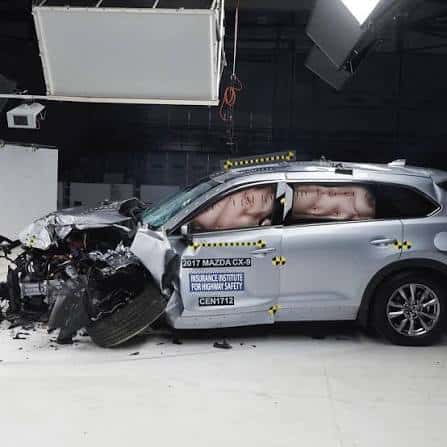
Understanding car safety crash tests, what they are, how they work, and why they’re important is key if you value safety and structural integrity in your car. Car crash tests are real-life imitations of car accidents that are performed using real cars and dummies. After each test, the physical damage to the crash test dummies involved in the test is assessed. These special crash test dummies are built specifically to react to car accidents just like a human driver or passenger would in terms of physical injury. Car crash tests provide an accurate picture of how safe a certain car is and how likely it is that a driver or passenger in that car would sustain a serious injury or even die in the case of an accident.
Who Performs Car Safety Crash Tests?
There are two main organizations in the United States that perform crash tests: the National Highway Traffic Safety Administration (NHTSA) and the Insurance Institute for Highway Safety (IIHS). The NHTSA and the IIHS are the two most reputable and well- known organizations that test the safety of different cars on the market through crash tests. These organizations assign safety ratings based on how a car and the crash test dummies inside of it respond to different crash simulations.
What are the Different Types of Car Safety Crash Tests?
There are multiple types of car safety crash tests that the NHTSA and the IIHS perform in order to accurately assess the safety and structural integrity of a car. The NHSTA and the IIHS intentionally perform different tests in order to provide car buyers with as many details as possible about the safety of a certain car.
NHTSA Crash Tests
The types of crash tests that the NHTSA performs include: frontal crash tests, side barrier crash tests, and side pole crash tests. These tests are designed to imitate the types of car crashes that are responsible for the most deaths and serious injuries on the road. In addition to these tests, the NHTSA also performs rollover tests that assess how likely a car is to roll over on the road and how it responds in the case of a rollover. All crash test dummies wear seat belts in these safety tests, and tests are only performed between vehicles within the same weight class.
Frontal Crash Test
The NHTSA’s frontal crash test assesses how a certain car would respond in the case of a head-on collision with another vehicle. This test is performed by crashing a car moving at 35 MPH into a fixed barrier. It uses two crash test dummies: an adult male in the driver’s seat and a small adult female in the passenger seat.
Side Barrier Crash Test
The side barrier crash test simulates an intersection-type crash scenario in which one car crashes into the driver’s side of another car. In this test, a moving barrier crashes into a stationary vehicle at a speed of 38.5 MPH. The crash test dummies used in this test are an adult male in the driver’s seat and a small adult female in the backseat on the driver’s side—where the vehicle is hit.
Side Pole Crash Test
The NHSTA’s side pole crash test simulates an accident caused by a vehicle crashing into a standard telephone pole on the driver’s side at a speed of 20 mph. This test uses one crash test dummy: a small adult female in the driver’s seat.
IIHS Crash Tests
The IIHS performs frontal offset crash tests and side impact crash tests that are very similar to the frontal crash and side barrier crash tests performed by the NHSTA.
In addition to these tests, the IIHS also performs tests that asses the safety and structural integrity of other parts of a car. They use crash tests to evaluate a car’s bumpers, roof strength, head restraints, and electronic stability control
How are Cars Rated and What do These Ratings Mean?
The NHSTA and the IIHS use different rating systems for the cars they crash test. Understanding these rating systems is important, especially if you’re in the market for a car. If you don’t have a thorough understanding of how cars are rated and what these ratings mean, you might end up accidentally settling for a car that isn’t safer and less reliable than you thought.
NHSTA Rating System
The NHSTA uses a simple, 5-star rating system. One star is the lowest rating a car can receive and indicates that driving that car puts drivers and passengers at a high risk of serious injuries or death in the case of a crash. A 5-star rating is the highest possible rating by NHSTA. Cars rated with five stars are considered the safest cars on the market. In addition to their star rating, NHSTA also mark cars with a question-mark symbol if they discover any notable safety concern in that car through the tests they perform.
IIHS Rating System
IIHS rates cars they crash test with one of four ratings: good, acceptable, marginal, or poor. This rating system is pretty self-explanatory. Good is the highest possible rating, and poor is the lowest.
Recent statistics suggest that a driver involved in a frontal crash in a car with a ‘good’ rating is almost 50% less likely to die or sustain a serious injury than a driver in a similar car with a ‘poor’ rating. In the case of a side impact crash, the driver of a car rated ‘good’ is approximately 70% less likely to die or be seriously injured than a driver in a similar car rated ‘poor’.

0 comment(s) so far on A Quick Guide to Understanding Car Safety Crash Tests